Do Microplastics Affect Fertility? PVC Plastic Near the Eggs Was Linked to Fewer IVF Births
Do microplastics affect fertility? A Chinese study found tiny plastic particles in the fluid surrounding women’s eggs, and women with more PVC had fewer eggs, fewer good embryos and lower chances of a baby after IVF.
Do microplastics affect fertility?
They may. In a study of 203 women having IVF in Beijing, those with more PVC plastic particles in the fluid surrounding their eggs had fewer eggs collected, fewer good-quality embryos and about 40% lower odds of a live birth per step up in PVC level. Two other plastics showed no link. It is an early, observational finding.
Microplastics have been found in blood, breast milk, the placenta and even the brain. Now researchers are asking whether they reach the eggs, and what that means for women hoping to conceive. A study published in BJOG: An International Journal of Obstetrics and Gynaecology on 18 November 2026 measured plastic particles in the fluid around women’s eggs during IVF, a direct way to explore whether microplastics and fertility are linked.
What are microplastics, and how do they get into the body?
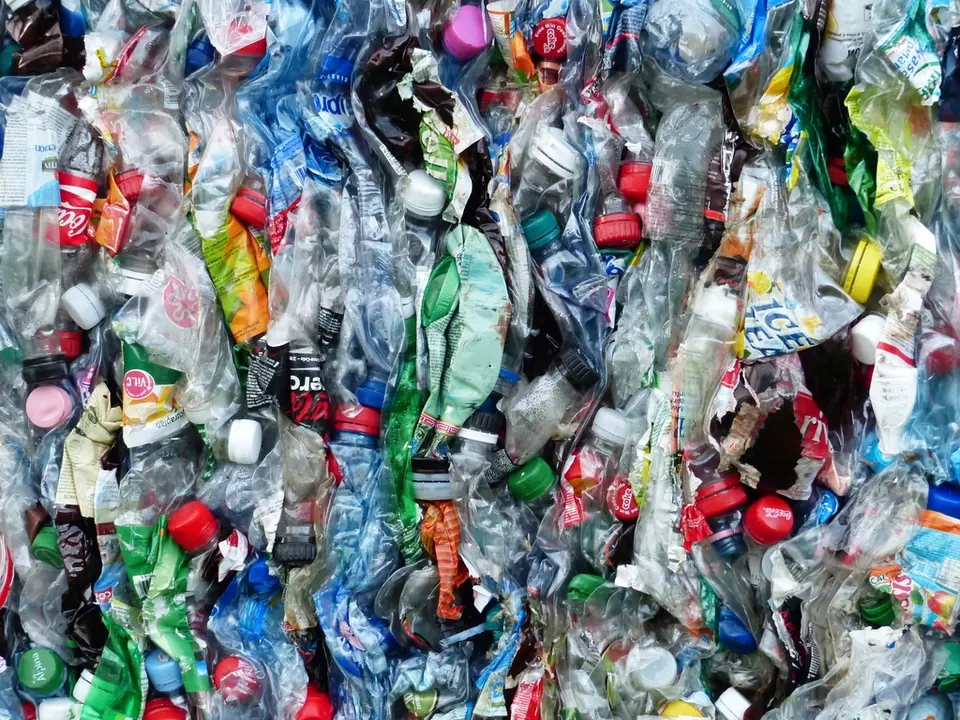
Microplastics are plastic fragments smaller than 5 millimetres; nanoplastics are far smaller still, invisible even under an ordinary microscope. They come from the breakdown of packaging, textiles, tyres and household items. We swallow them with food and water, breathe them in with dust and air, and they can then travel in the bloodstream.
Laboratory studies suggest plastics can cause inflammation and oxidative stress and may carry chemicals that disrupt hormones. But evidence from real women going through fertility treatment has been scarce.
How was the study done?
During IVF, eggs are collected from the ovaries together with the fluid of each follicle, the small sac where an egg matures. The researchers kept this fluid and used a sensitive chemical technique, pyrolysis-gas chromatography/mass spectrometry, to measure three common plastics:
- PVC (polyvinyl chloride), used in pipes, flooring, cling film, some packaging and medical tubing;
- Polystyrene, found in foam containers and disposable cups;
- Polyamide 66, a type of nylon used in textiles.
They then followed each woman’s IVF cycle: how many eggs were retrieved and fertilised, how many good-quality embryos developed, and whether she became pregnant and had a baby. Results were adjusted for other factors that influence IVF success.
Do microplastics affect egg quality and IVF success? The results
Overall, 62 women had a baby, about 31% of cycles and 39% of embryo transfers.
PVC was linked to poorer results at every stage
For each step up in PVC concentration (one standard deviation), women had on average:
- 1.3 fewer eggs retrieved;
- 0.9 fewer normally fertilised eggs;
- 0.6 fewer good-quality embryos;
- 45% lower odds of a clinical pregnancy and 40% lower odds of a live birth.
Not all plastics behaved the same
Polystyrene and nylon were not linked to IVF outcomes once other factors were taken into account. This suggests the type of plastic may matter, possibly because of the chemicals added to PVC to make it soft or stable.
Why might PVC harm eggs?
The study didn’t test mechanisms. Researchers suspect that particles in the follicle could trigger inflammation and oxidative stress around the developing egg. PVC products can also contain plasticisers such as phthalates, which are known to interfere with hormones.
What are the limits of the study?
- Small and local: 203 women at one Beijing clinic; results need confirming in larger groups elsewhere.
- Association only: women with more PVC may differ in other ways, such as diet, work or where they live.
- IVF patients only: we can’t tell whether the same applies to natural conception.
- One sample: plastic levels were measured once, and possible contamination during collection is hard to rule out entirely.
The study was funded by Chinese public research grants. Our summary is based on the published abstract.
We can’t avoid plastics completely, but we can reduce how much ends up on our plate.
How can you reduce your exposure to microplastics?
Nobody can avoid microplastics entirely, and this study doesn’t prove that cutting exposure improves fertility. Still, simple habits can lower contact: don’t heat food or drinks in plastic containers, use glass or stainless steel for storage, choose fresh over heavily packaged food, avoid cling film touching hot or fatty food, and dust and vacuum regularly, as household dust carries particles.
If you are struggling to conceive, the factors with the strongest evidence remain age, smoking, weight and underlying conditions. A fertility specialist can review these with you.
Frequently asked questions
Can microplastics cause infertility?
It isn’t proven. This study found that women with more PVC particles in the fluid around their eggs had poorer IVF results, but it shows a link rather than cause and effect. Larger studies are needed.
Are microplastics found in the ovaries?
Yes. Several studies, including this one, have detected plastic particles in follicular fluid, the liquid surrounding developing eggs in the ovary.
Which plastics are most harmful?
In this study, only PVC was linked to worse IVF outcomes; polystyrene and nylon were not. PVC often contains additives such as phthalates that can disrupt hormones.
How can I reduce microplastics when trying to conceive?
Avoid heating food in plastic, store food in glass or steel, limit heavily packaged and processed foods, and keep dust down at home. Not smoking and keeping a healthy weight have stronger evidence for fertility.
Sources
- Xiong X., Si M., Liu M., Liu R., Li R., Tian T., Qi X., Qiao J.. Microplastics and Nanoplastics in Follicular Fluid and in Vitro Fertilisation Outcomes: A Prospective Cohort Study. BJOG: An International Journal of Obstetrics and Gynaecology, published online 18 November 2026. doi:10.1111/1471-0528.70382