How Do You Get Rid of Acne? What Dermatologists Recommend, From Gentle Care to Prescription Treatments
How do you get rid of acne for good? The gentle routine, the treatments dermatologists recommend, hormonal options for women, and when to see a doctor, based on the 2024 acne guidelines.
How do you get rid of acne?
Wash gently twice a day, use non-comedogenic products and don’t pick. Add a proven treatment such as benzoyl peroxide or a retinoid like adapalene, and give it at least 6 to 8 weeks. If acne is moderate, severe or scarring, a doctor can prescribe combination creams, antibiotics, hormonal treatment or isotretinoin.
Acne isn’t only a teenage problem. Many women still get breakouts in their twenties, thirties and beyond, often around the chin and jawline. If you want to know how to get rid of acne, the good news is that dermatologists now agree on what works. This guide follows the American Academy of Dermatology’s 2024 acne guidelines, the UK’s NICE guideline and NHS advice, and explains them in plain language.
What causes acne?
Acne starts in the hair follicles, the tiny openings we call pores. Too much oil and dead skin cells block the pore, bacteria that normally live on the skin multiply inside it, and the area becomes inflamed. The result ranges from blackheads and whiteheads to red spots, pustules and deep, painful nodules.
Why adult women get acne
According to the American Academy of Dermatology, the most common triggers of adult acne are:
- Hormones: changes around periods, pregnancy, menopause, or starting or stopping the pill.
- Stress: the body makes more androgens, hormones that stimulate oil glands.
- Family history: some people are genetically more prone.
- Skin and hair products: heavy or oily formulas can clog pores.
- Medicines: acne is a side effect of some drugs. Don’t stop a medicine on your own; talk to the doctor who prescribed it.
- An underlying condition: sometimes acne is a sign of another health problem, such as a hormonal disorder.
How to get rid of acne: the daily routine
Gentle care is the base of every treatment, and it can stop your skin getting worse.
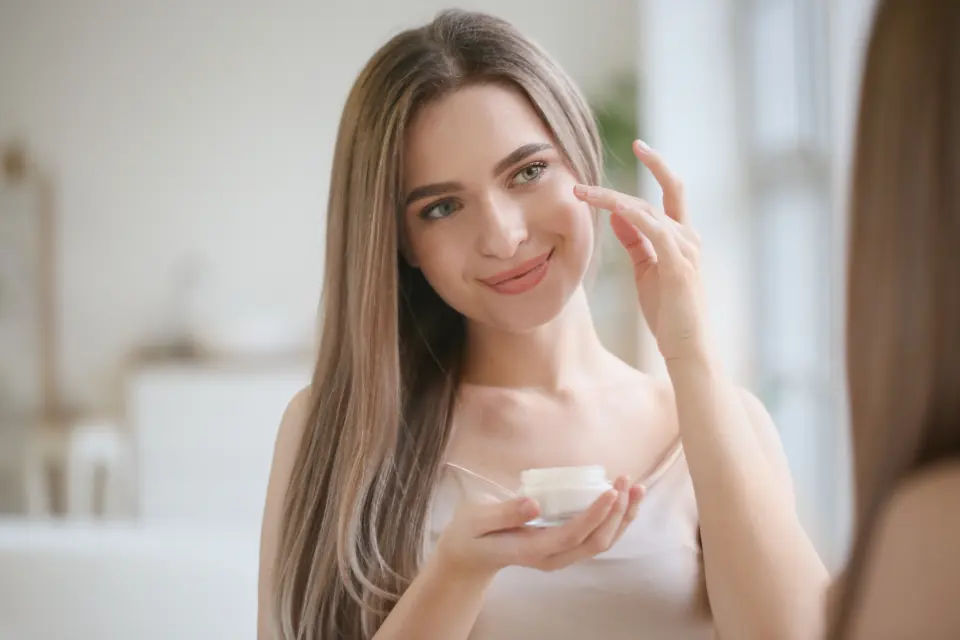
- Wash twice a day, gently: NICE advises a non-alkaline cleanser that is pH-neutral or slightly acidic. Use your fingertips; the AAD warns that washcloths, sponges and scrubs irritate the skin.
- Choose “non-comedogenic”: moisturiser, sunscreen and make-up should be labelled non-comedogenic, “won’t clog pores” or oil-free.
- Remove make-up every night.
- Don’t pick or squeeze: it makes spots last longer and raises the risk of scars and dark marks.
- Wear sunscreen: SPF 30 or higher, non-comedogenic. Many acne treatments make skin more sensitive to the sun.
What is the best treatment for acne?
The 2024 AAD guidelines reviewed the evidence and made 18 recommendations. The strongest ones are for benzoyl peroxide, topical retinoids, topical antibiotics and oral doxycycline, and for isotretinoin in severe cases.
Treatments you can start with
- Benzoyl peroxide: kills acne bacteria and helps unclog pores. It can bleach towels and clothes.
- Adapalene: a retinoid that keeps pores clear. It’s sold without a prescription in some countries; elsewhere a doctor prescribes it.
- Salicylic acid and azelaic acid: also recommended, but with less evidence.
Irritation, dryness and peeling are common in the first weeks. Start slowly, for example every other evening, and add a light moisturiser.
Prescription treatments
NICE recommends a 12-week course of a first-line option, usually a cream or gel combining two ingredients, such as adapalene with benzoyl peroxide. For moderate to severe acne, a doctor may add an antibiotic tablet such as doxycycline or lymecycline.
Both guidelines say antibiotics should be combined with a topical treatment and used for a limited time, to reduce the risk of bacterial resistance.
Which acne treatments are for women?
Two hormonal options are recommended for women in the AAD guidelines:
- The combined pill: it lowers the hormones that drive oil production. NICE suggests that women with acne who want hormonal contraception consider the combined pill rather than the progestogen-only pill.
- Spironolactone: a tablet that blocks androgens, often used for hormonal acne along the jawline.
Pregnancy: topical retinoids and isotretinoin must not be used during pregnancy. Tell your doctor if you are pregnant, trying to conceive or breastfeeding, as some treatments need to be avoided or used with caution.
What about severe acne and isotretinoin?
For acne that is severe, leaves scars, affects your wellbeing or hasn’t cleared with standard treatment, the AAD strongly recommends oral isotretinoin. It is prescribed and closely monitored by a specialist, with strict pregnancy prevention, because it can cause serious birth defects. Large, painful spots can also be treated with a steroid injection by a dermatologist.
Does diet cause acne?
The evidence is too weak to say. NICE advises that there isn’t enough evidence to support any specific diet for treating acne. Eat a balanced diet for your general health, but don’t expect cutting out a single food to clear your skin.
When should you see a doctor about acne?
- Pharmacy treatments haven’t helped after a couple of months of regular use.
- Spots are deep, painful or leave scars or dark marks.
- Acne appeared suddenly as an adult, or comes with irregular periods or extra facial hair, which can point to a hormonal condition.
- It is affecting your mood or confidence. Acne can take a real toll on mental health, and that is reason enough to seek help.
Acne is treatable. The key is a gentle routine, a proven treatment used every day, and enough patience to give it at least two months.
Frequently asked questions
How long does it take to get rid of acne?
Most treatments take at least 6 to 8 weeks to reduce breakouts, and a full course usually lasts around 12 weeks. Keep going even if you don’t see a change at first.
What is hormonal acne?
Hormonal acne is acne linked to hormone changes, around periods, pregnancy, menopause or the pill. It often appears on the chin and jawline. A doctor may suggest the combined pill or spironolactone.
Is benzoyl peroxide or adapalene better for acne?
Both are strongly recommended and work in different ways, so they are often combined. Benzoyl peroxide targets bacteria; adapalene keeps pores from clogging.
Can toothpaste get rid of a pimple?
No. Toothpaste isn’t an acne treatment and can irritate the skin. A dab of benzoyl peroxide works better and is designed for skin.
Sources
- Reynolds R.V., Yeung H., Cheng C.E., et al., Barbieri J.S.. Guidelines of care for the management of acne vulgaris. Journal of the American Academy of Dermatology, published online 30 January 2024. doi:10.1016/j.jaad.2023.12.017
- National Institute for Health and Care Excellence (NICE). Acne vulgaris: management (NG198). NICE guideline, published 25 June 2021, last updated 3 August 2026.
- NHS. Acne. NHS Health A to Z, page last reviewed 22 September 2026.
- American Academy of Dermatology. Acne: Diagnosis and treatment. AAD public information, accessed 28 November 2026.
- American Academy of Dermatology. Adult acne. AAD public information, accessed 28 November 2026.
This article is for information only and is not medical advice. How we research and check our stories.